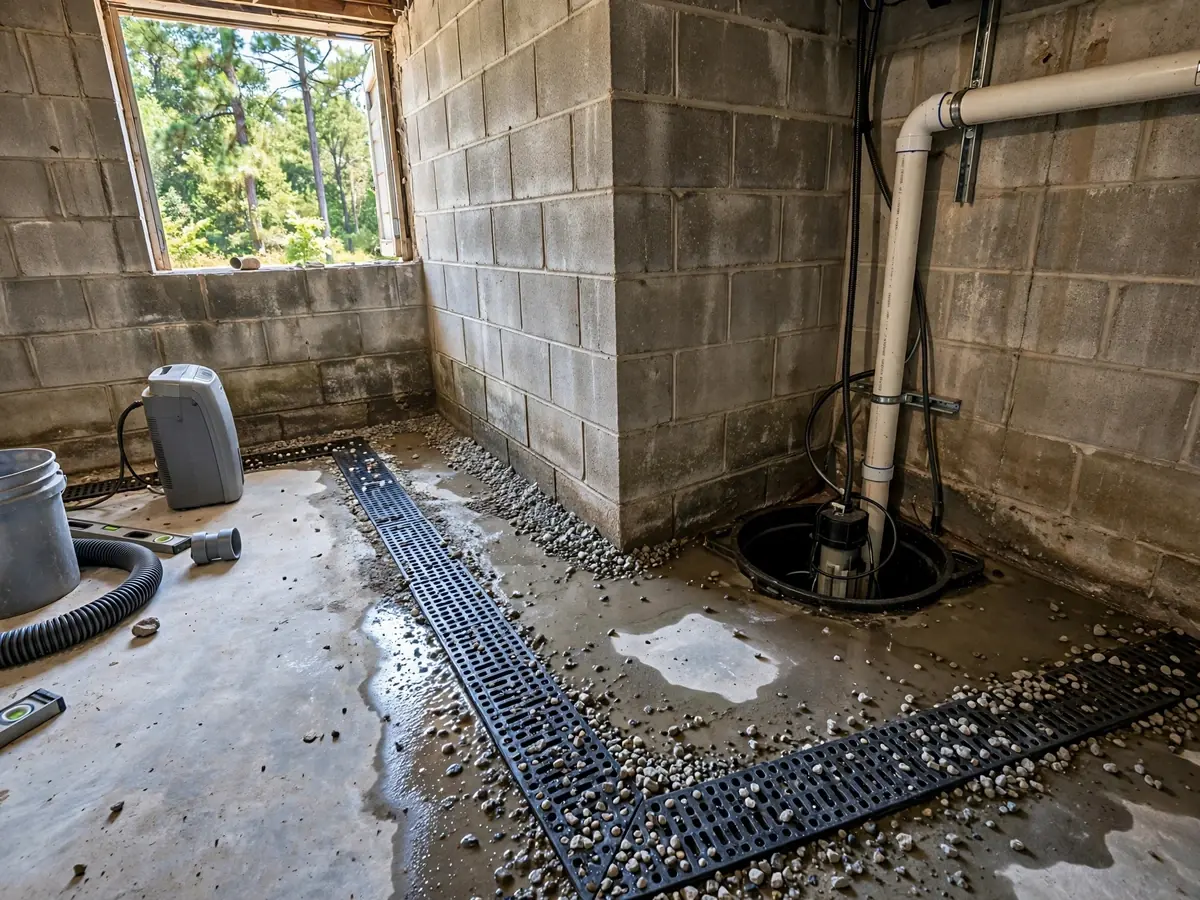
Check where the water appears: along one wall points to runoff, at the wall-floor joint points to groundwater pressure, and a damp spot with no connection to weather points to a plumbing leak. Run a sump pump if you have one and move belongings up. If water is rising now, call (385) 488-1892 and we will send a plumber with a pump.
Where the water enters
| Where it shows | Probable source | Typical fix |
|---|---|---|
| Along one wall after a storm | Surface runoff from grading or downspouts | Regrade, extend downspouts, check window wells |
| At the wall-floor joint | Groundwater pressure | Interior drain and sump pump |
| Through a crack in a wall | Foundation crack under hydrostatic pressure | Crack repair plus drainage |
| Around a window well | Clogged or overflowing well | Clean, add cover, improve drainage |
| Through the floor center | Groundwater rising or slab leak | Sump check and leak detection |
| Damp with no weather link | Plumbing leak or condensation | Meter test, ventilation |
First aid for a wet basement
In the first hours
- Lift belongings and stored boxes off the floor.
- Turn off power to wet areas only if you can reach the panel without standing in water.
- Run the sump pump, or call a plumber if you do not have one or it has failed.
- Clear window wells and make sure downspouts discharge away from the foundation.
- Take photos and notes for insurance.
- Start drying with fans and a dehumidifier as soon as the water is controlled.
Draper note: snow, slopes and timing
Draper climbs toward the Wasatch Range, and snow can sit from November to March. Warm days after a deep snowpack send meltwater downhill over frozen ground, which cannot absorb it. Water has nowhere to go but along the surface and against foundations. Homes below slopes and near drainage paths see it first.
Late-summer monsoon storms in July and August bring a different pattern, a sudden heavy load rather than a slow melt. If your basement stays dry in spring and floods in August, the storm path and your downspouts are a likely culprit.
Sorting out pump versus waterproofing
A sump pump alone fits when
- Water collects occasionally in a pit
- The pump runs without flooding the floor
- The floor and walls are dry between events
- You have a working backup
Waterproofing fits when
- Water enters along walls or the wall-floor joint
- The same areas get wet every spring
- Finished space is damaged repeatedly
- Grading fixes did not solve it
See sump pump repair for emergency service and basement waterproofing for the larger plan. A sump pump failure is a different problem from a foundation leak, and treating one as the other wastes money.
Fixes you can do yourself
Extend downspouts
Discharge several feet away from the foundation, on ground that slopes away.
Check grading
The soil should fall away from the wall, not toward it.
Clear window wells
Leaves and debris block drainage. Covers keep rain out.
Adjust sprinklers
Do not aim sprinkler heads at the foundation. Heavy watering next to the wall adds groundwater.
If you have a finished basement, think about what you would lose in a flood: flooring, drywall, furniture and stored items. That list makes the cost of prevention easier to weigh. A pump, a backup and a few hours of gutter and grading work cost far less than replacing a finished room.
Water in the basement?
Call for emergency help or book a waterproofing inspection.
Questions to ask before you hire anyone
Protect yourself from a bad fit
- Ask what is causing the water, and how they know.
- Ask whether the plan is interior drainage, exterior work or grading, and why.
- Ask what happens if the pump loses power.
- Ask for a written scope, a timeline and a price before work starts.
- Check the contractor license on the Utah Division of Occupational and Professional Licensing lookup.
- Be wary of anyone who recommends a full system without looking at the grading and gutters first.
Seasonal checklist for a Draper basement
| Season | Task | Why |
|---|---|---|
| Late fall | Disconnect hoses, clear gutters, extend downspouts | Keeps meltwater away from the foundation |
| Winter | Keep snow shoveled away from the foundation and window wells | Reduces what melts against the wall |
| Early spring | Test the sump pump and battery backup | Melt season is the heaviest load |
| Late spring | Set sprinklers away from the foundation | Irrigation adds to groundwater |
| Summer storm season | Check window wells and the discharge outlet | Monsoon storms deliver sudden loads |
Why timing matters
The sooner you identify the entry point, the smaller the fix tends to be. A single downspout that discharges at the foundation can wet a wall every storm, and moving it costs almost nothing.
Waiting a season to see whether the water comes back often just lets the damage spread to carpet, drywall and stored belongings. Take photos each time water appears, note the weather and the location, and bring those notes to any inspection. They help a professional separate a surface problem from a deeper one.
Mold and cleanup
Water that sits on carpet or drywall for more than a day or two invites mold. Dry quickly, discard soaked porous materials and ask a restoration company about anything that will not dry. Plumbing is not a mold remediation service, but fixing the water source is the first step.
Check the insurance fine print
Standard homeowner policies often exclude groundwater seepage and foundation leaks, and sump pump failure coverage usually requires an endorsement. Read your policy before storm season. If water came from a burst pipe, coverage may differ, so ask your agent about the cause. For Draper permit questions on drainage work, the Draper Building Division is at (801) 576-6399. Call 811 before any exterior digging.
Sources and standards behind this page
Drainage and grading advice here is general building practice. Plumbing that touches a drainage fix follows the International Plumbing Code (IPC) as amended by the Utah State Construction Code in Utah Code Title 15A. Licensing for contractors is checked on the Division of Occupational and Professional Licensing lookup.
Straight Answers
Meltwater runs over frozen ground and against foundations, and groundwater rises. Grading, downspouts and window wells decide how much reaches the wall.
No. A sump pump removes water that collects. Waterproofing controls where water goes, and often includes a pump.
Groundwater follows weather. A plumbing leak runs steadily. Do a meter test with all water off.
Many policies exclude groundwater and seepage unless you added a water backup endorsement. Check your policy.
Sometimes. If water enters from surface runoff, grading and downspout work can solve it. Groundwater pressure usually needs drainage.
Yes. Call (385) 488-1892 any hour for emergency pumping and repair.