If you hear water running when everything is off, or find a warm spot on the floor, shut off the main valve and call (385) 488-1892. Dispatch is open 24/7, and an active leak is treated as urgent.
Leak detection finds where the water is escaping before anyone opens a wall. The goal is a short, targeted repair instead of a demolition project, and an honest report when the leak is not where you thought.
Signs of a hidden leak
Water bill jumps
A higher bill with no change in habits is the classic sign. Draper has been installing AMI meters that track usage, so ask the city or WaterPro whether your account shows continuous flow.
Meter moves with everything off
Shut every tap and appliance off, then watch the meter dial. If it keeps spinning, water is escaping somewhere.
Warm floor or damp patch
A hot-water line leaking under a slab can warm the floor above it.
Musty smell or mold
A stale smell in a closet or basement corner can mean slow moisture in the wall.
Sound of running water
A faint hiss or trickle when no fixture runs is the leak talking.
Low pressure
A sudden drop that is not tied to the city can mean a break in your line.
Do this first while you wait
Find the main valve
The shutoff is usually where the water line enters the house, in a basement, garage or utility room.
Do the meter test
With all water off, check the meter for movement. Take a photo of the dial and time it.
Look for the obvious
Check toilets, outdoor spigots and under sinks. A running toilet can mimic a hidden leak.
Protect belongings
Lift items off wet carpet and run a fan if it is safe. Do not use a vacuum on standing water.
How we trace a leak
Isolate
We close fixtures and valves to narrow which pipe is losing water.
Listen
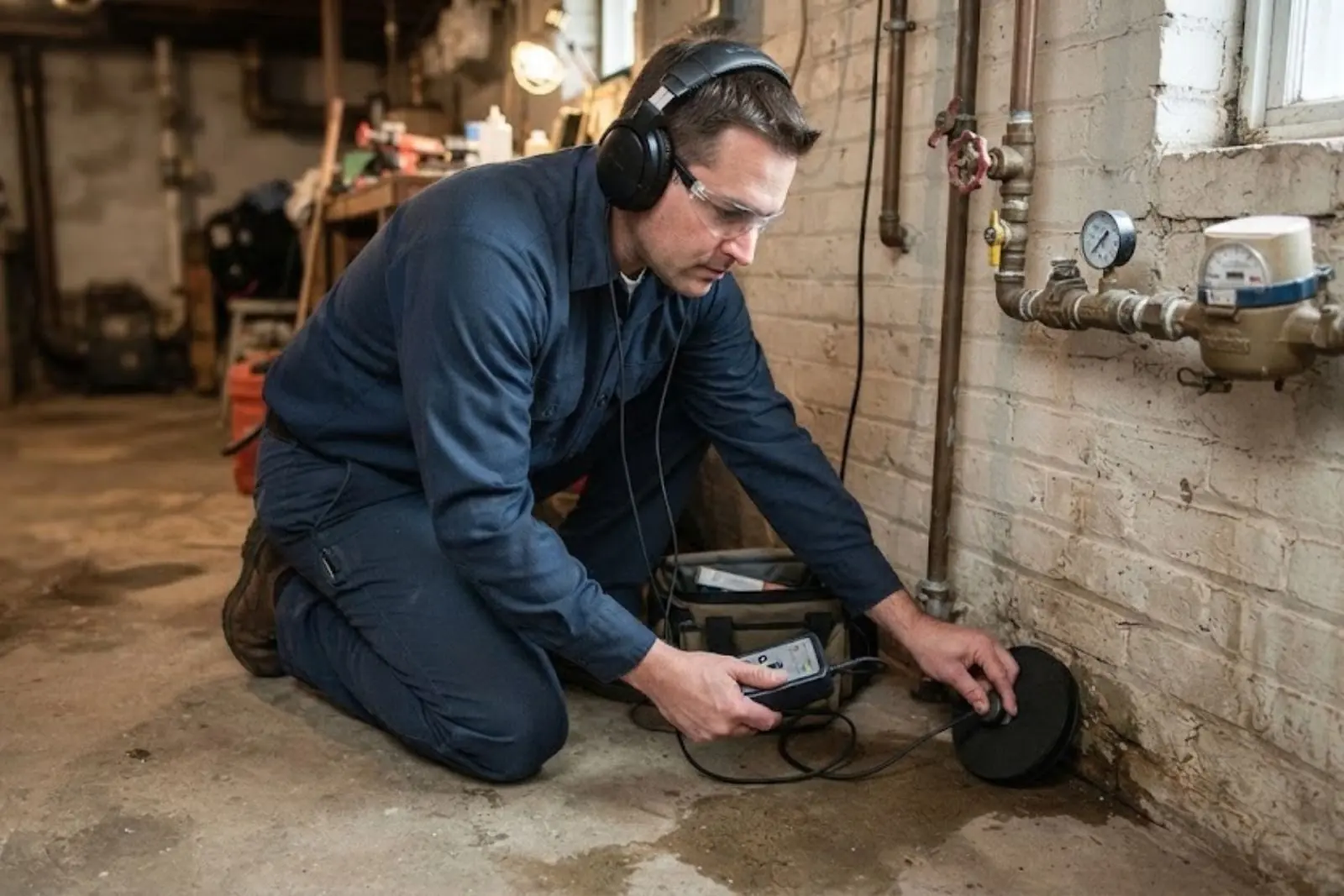
Acoustic ground microphones and correlators pick up the sound of water escaping a pressurized pipe.
Pressure test
We hold pressure on a section and see whether it drops.
Image
Thermal imaging and moisture meters check walls and floors without cutting them.
Confirm and report
We mark the spot, explain the damage and give you a repair option.
| Question | Tool | What it shows |
|---|---|---|
| Is water escaping at all? | Meter test and pressure hold | Yes or no, and which zone |
| Where under the slab? | Acoustic listening and correlator | A point along the pipe |
| Is the wall wet? | Moisture meter and thermal camera | Damp areas without opening drywall |
| Is the sewer line leaking? | Camera inspection | Cracks or joint loss. See sewer camera inspection |
Hearing water in the wall?
Call now. We handle active leaks day or night.
Outdoor use is a big part of Draper water bills
Draper's water element reports that outdoor use is about 63% of demand and indoor use about 37%. In summer a leaking sprinkler line or hose bib can hide inside that big outdoor number.
Secondary irrigation water, where it applies, runs on a separate system from the culinary line, and Utah Code 73-10-34 requires secondary connections to be metered by 2030. If the culinary meter is running with everything off, the leak is on the drinking water side.
A broken line and a burst pipe are different problems. If a pipe has already failed and water is pouring out, go to burst pipe repair. If the leak is in the supply line from the street, see water line repair.
What changes the price of leak detection
Many policies cover sudden water damage and not the cost of locating the leak itself, though some include tear-out and access coverage. Ask your agent. Want your real number? Call (385) 488-1892.
Sources and standards behind this page
Utah Code 73-10-34 requires secondary water connections to be metered by January 1, 2030, with the duty on suppliers. The outdoor share of demand and the metering program come from Draper's water element published through the Utah Division of Water Resources.
Straight Answers
Yes. Call (385) 488-1892 any hour. Shut off the main valve first, then tell the dispatcher what you see so we send the right equipment.
Usually yes. Listening devices, pressure tests and thermal imaging narrow the location so any opening is small and in the right place.
Turn everything off, note the meter reading and look for movement of the small dial or leak indicator. Wait fifteen minutes and read again. Movement suggests a leak after the meter.
Yes. If the equipment finds nothing, we say so. A running toilet or irrigation issue is often the real cause.
Yes. Acoustic gear and a warm-spot check can locate a leak under a concrete slab. Repair choices include a spot dig, rerouting the line or repiping.
Coverage varies. Some policies include access and tear-out costs for covered leaks. Ask your agent and keep our report.