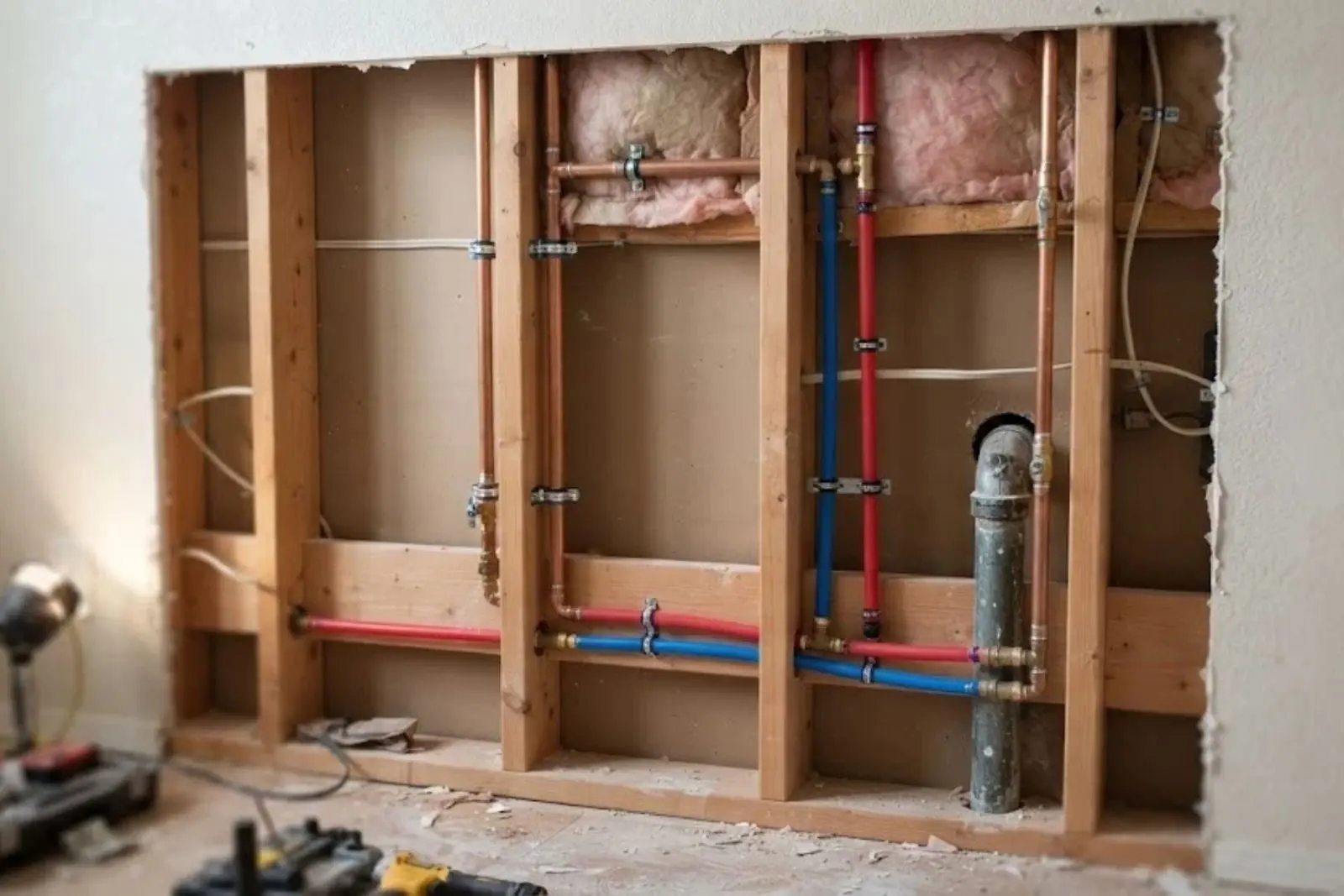
Repiping is a planned project, not an emergency fix. If you are on your third pinhole leak in two years, call (385) 488-1892 for a walkthrough. The same line takes emergencies 24/7, so a pipe that bursts while you are deciding gets handled right away.
Signs your pipes are due for replacement
Repeated pinholes
Small leaks in copper or galvanized steel often appear in clusters as the pipe thins.
Rusty or brown water
Galvanized steel corrodes from the inside and sheds rust.
Low pressure
Mineral and rust buildup narrows older pipes.
Flaking or green stains
Corrosion on visible copper or at joints.
Known problem material
Some plastic or polybutylene pipe in older homes is known for failures.
Pipe materials compared
| Material | Strengths | Watch for |
|---|---|---|
| PEX | Flexible, quick to run through walls, resists freeze splits better than rigid pipe | Fittings must be installed correctly and kept out of sunlight |
| Copper | Long track record, durable | Costs more and pinholes can occur with aggressive water |
| CPVC | Lower material cost | Can become brittle with age and heat |
| Galvanized steel (existing) | Common in older homes | Corrodes inside, so plan to replace it |
We recommend a material based on your house and your water, not a favorite. Draper City reports total hardness up to 357 mg/L at some sources, and water chemistry plays a role in which pipe holds up best. A softener and a pressure regulator protect new pipes.
How a repipe goes
Walk the house
We count fixtures, trace the main and note the access points.
Plan the route
We map supply lines with minimal wall openings and a shutoff plan.
Replace in stages
New lines go in while the old ones are disconnected, with water restored each evening when possible.
Patch and test
We pressure test the new lines, repair access holes or leave them for your drywall contractor, and walk you through the shutoffs.
Ready for a repipe quote?
Call to book a walkthrough. We answer the phone 24/7.
Draper homes and timing
Draper has grown since its 1978 incorporation, and the age of your house guides the pipe question. Homes from the 1970s and 1980s may have copper or galvanized lines, while some later homes used other materials. A visit with the plumber answers it in minutes, and the old pipe tells its own story where it enters the water heater.
Winter timing matters. The coldest months in Draper run November through March, and repiping an exterior wall in freezing weather needs planning. Many families choose spring or fall. If a line bursts first, burst pipe repair gets you back in service while you plan the larger job.
Permits and licensed work
Repiping typically involves a permit. Ask the Draper Building Division at (801) 576-6399 about requirements. Utah licenses plumbers in several classes, and you can verify a license on the state Division of Occupational and Professional Licensing site. Utah also requires the water heater to be strapped, so expect that detail on any visit that touches the tank.
What changes the price of repiping
Insurance usually does not pay to replace aging pipes, though it may cover water damage from a sudden failure. Want your real number? Call (385) 488-1892.
What to do before a repipe starts
- Clear access to sinks, the water heater and the main shutoff.
- Move furniture and valuables away from walls that may be opened.
- Plan for water to be off for part of each working day and store drinking water.
- Ask in advance about drywall patching, painting and who handles inspection.
- Turn off the water heater if the crew asks, to avoid heating an empty tank.
Sources and standards behind this page
New supply lines follow the International Plumbing Code (IPC) as amended by the Utah State Construction Code in Utah Code Title 15A, and Utah requires water heaters to be anchored or strapped. Hardness figures come from Draper City's 2022 water quality report. The 1978 incorporation date and housing-age remarks are general context, so a walkthrough of your own house is what settles the question.
Straight Answers
Yes. Call (385) 488-1892 any hour. If a pipe fails, we stop the water and repair it, then discuss whether repiping makes sense.
One leak in a pipe that is otherwise sound is a repair. Repeated leaks, rusty water and low pressure across the house point to repiping.
Many homes take a few days. Larger houses or tight access take longer. We give a timeline after the walkthrough.
We aim to restore water at the end of each day when possible, though not always for the entire project.
PEX is widely used and approved for potable water in many codes. Ask us about the specific brand and fittings we install.
We cut access holes where needed and patch plumbing penetrations as agreed. Painting and finish repair are usually separate.