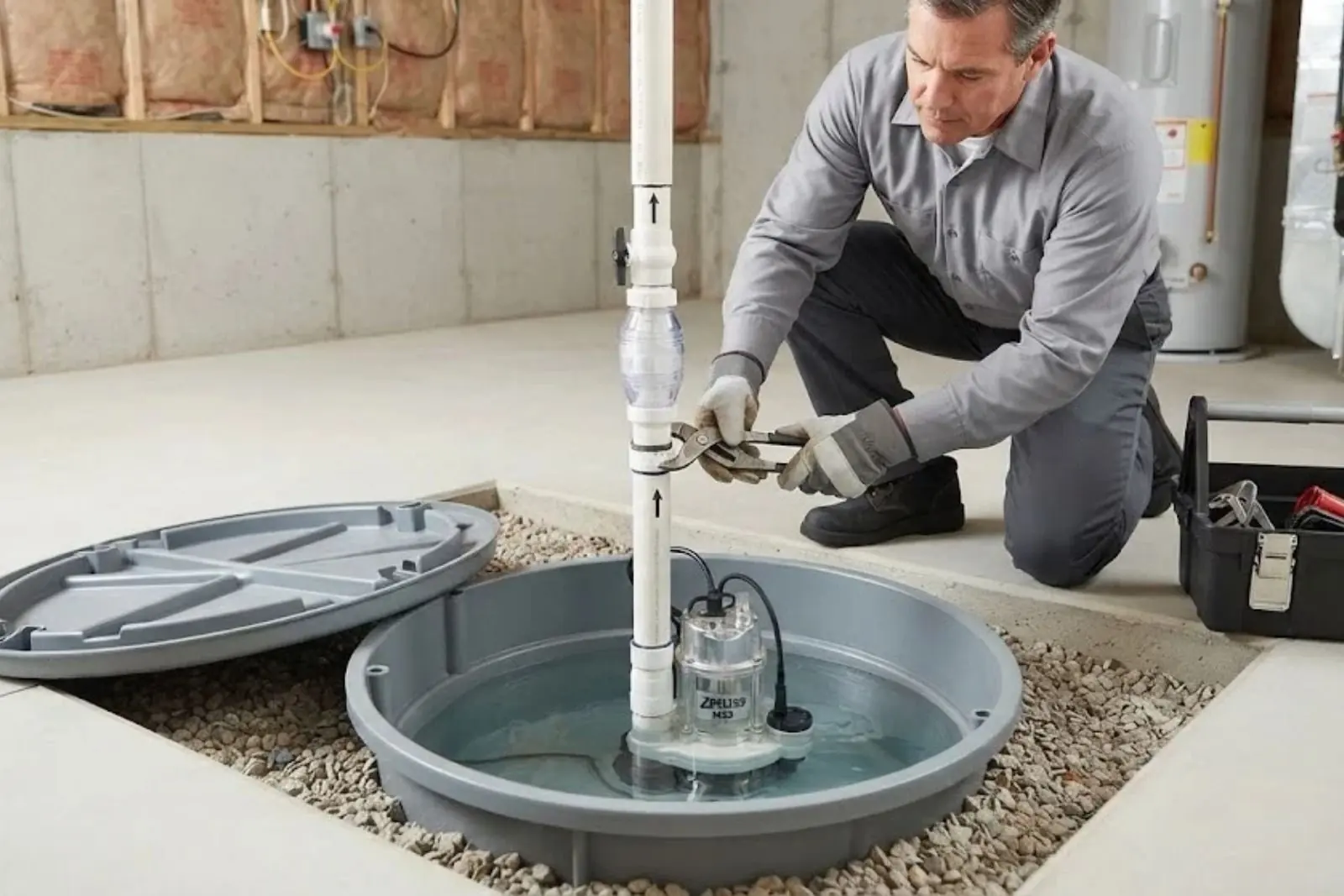
Check three things in order: the power, the float and the discharge line. Many pumps fail because the plug is loose, the float is stuck against the pit wall or the discharge pipe is frozen or clogged. If the pit is rising and the pump still will not move water, call (385) 488-1892. The line is open 24/7, and a plumber can bring a pump the same day.
Quick checks before you call
Power
Confirm the pump is plugged into a working outlet. Check the GFCI and the breaker. Reset them only if the area around the outlet is dry.
Float
Lift the float by hand. If the pump starts, the float was stuck or the switch is failing.
Discharge
Walk outside and look at the discharge pipe. Make sure it is not blocked by ice, snow, mud or a buried end.
Check valve
A valve that sticks closed stops water leaving, and one that fails open lets water fall back into the pit.
Symptoms and what they mean
| Symptom | Likely cause | Fix |
|---|---|---|
| Silent, pit full | No power, burned motor or stuck float | Restore power or replace the pump |
| Hums but does not pump | Jammed impeller or blocked discharge | Clear and test |
| Runs nonstop | Stuck float or high groundwater | Reset float, check valve, test inflow |
| Cycles every few seconds | Check valve failing and water falls back | Replace the check valve |
| Very loud | Worn bearings or debris | Replace the pump |
| Pit overflows during storms | Pump too small or power loss | Larger pump and a backup system |
Draper note: when the pump works hardest
Draper sits at the foot of the Wasatch Range with snow from November to March. Meltwater and spring storms raise groundwater and push runoff toward foundations. The pump is busiest in March and April. That is the right time to test it, not the night the pit fills.
Late-summer monsoon storms in July and August can also send a lot of water quickly. Heavy lawn watering next to a foundation wall adds to the groundwater load. WaterPro typically runs secondary irrigation water from about April 15 to October 15, and a basement that gets damp only in that window is a hint to adjust sprinklers.
Test it in two minutes
Pour water in the pit
Add a bucket slowly until the float rises.
Watch it start
The pump should turn on and empty the pit.
Watch it stop
It should shut off when the water drops.
Check the outlet
Confirm water flows from the discharge pipe outside and away from the house.
Why every sump pit needs a backup plan
The usual cause of a basement flood is not a broken pump. It is a power outage during the storm that caused the water. A battery backup pump, or a water-powered backup, keeps the pit from overflowing when the primary stops. If your basement is finished, a backup is worth the cost, because the first flood costs more than the equipment.
Our sump pump repair page describes what a visit includes. If water is coming from walls or floor joints rather than the pit, basement waterproofing is the larger answer.
Pit filling?
Call now for emergency pumping and repair.
Where the discharge should go
Discharge checklist
- Outdoors, away from the foundation.
- Not into the sanitary sewer.
- Not onto a neighbor's property.
- Protected from freezing at the outlet.
- Ask the Draper Building Division at (801) 576-6399 about local rules.
In winter, an exposed outlet can freeze solid and send water back into the pit. Extending the line or using a freeze-resistant outlet helps.
Common mistakes that cause failures
Pit too small
A shallow or narrow pit makes the pump cycle too often and wear out.
No check valve
Without one, the pipe drains back into the pit every cycle.
Float jammed on the wall
A pump that is not centered can snag the float against the liner.
Silt and gravel in the pit
Debris reaches the impeller and shortens motor life.
Discharge too close to the house
Water returns to the foundation and recycles through the pit.
None of these are exotic, and a plumber can check all of them in a single visit. If your pump has never been looked at since it was installed, a service call before the spring melt is a sound investment.
What a service visit includes
Inspect the pit
We clear silt, check the liner and confirm the pit is deep enough for the pump to cycle properly.
Test the pump and float
We run water through the pit and watch the start, the stop and the flow.
Check the valve and outlet
A good check valve and a clear outlet protect the pump from backflow and freezing.
Test the backup
If you have a battery backup, we check the battery and the switch.
The visit should end with a plain statement of what is good, what is worn and what to replace first. If everything checks out, we say so. If the pump is near the end of its life, we show you what we found and let you choose whether to replace it now or before the next melt.
Do not ignore the sound of a pump. A pump that grinds, rattles or screams is asking for attention, and a quiet rhythm of short cycles in the spring is normal. A change in rhythm, such as cycling every few seconds or running for hours, is the signal to look.
Replace before it fails
Pumps commonly last around ten years. If yours is older, if it cycles constantly or if it is noisy, replace it before storm season. A new pump is much cheaper than a flooded basement, and your insurer may not cover groundwater unless you carry a water backup endorsement.
Sources and standards behind this page
Pump testing steps are standard field practice. Discharge rules are a local matter, so we point you to the Draper Building Division. Irrigation dates come from WaterPro.
Straight Answers
Check the plug, the GFCI and the breaker. Then lift the float by hand. If it still will not start, the motor or switch may have failed.
A stuck float, a failed check valve or a high water table can keep it running. Draper snowmelt and irrigation can raise groundwater.
Commonly around ten years, depending on use. Replace older pumps before storm season.
If your basement is finished or storms often cause power loss, yes. It keeps the pit from overflowing when the primary stops.
Outdoors and away from the foundation, never into the sewer. Ask the Draper Building Division about local rules.
Yes. Call (385) 488-1892 any hour.